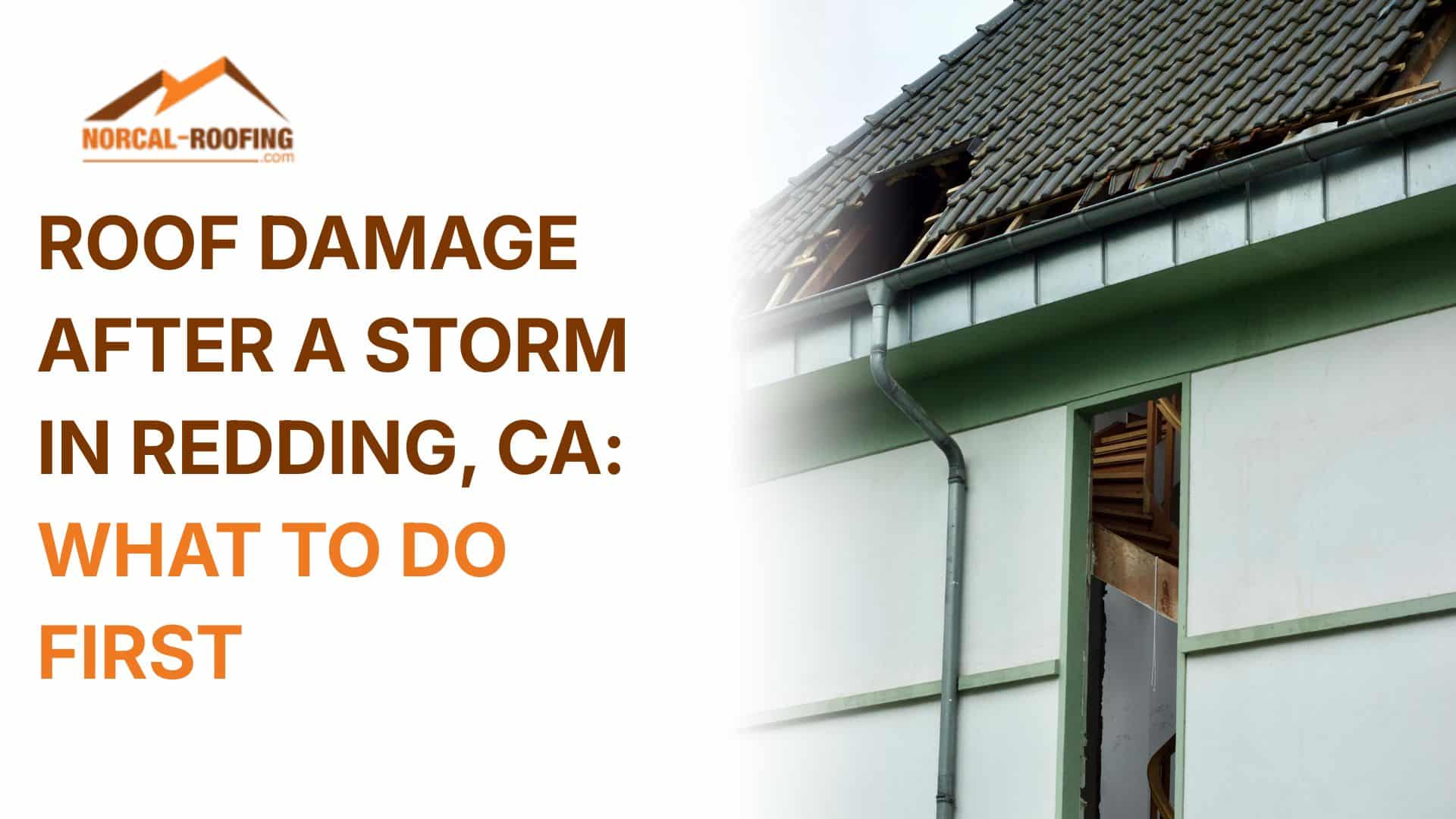
Roof Damage After a Storm in Redding, CA: What to Do First
A calm, safety-first plan for Northern California homeowners after wind, rain, or falling debris.
This article is general information for homeowners, not professional, legal, or insurance advice. Every home, roof, storm, and policy is different. For guidance specific to your situation, contact a licensed roofing contractor, your insurance carrier or agent, and — where appropriate — an attorney.
After a heavy rain, strong wind, or falling-branch event, it is tempting to step outside, look up at the roof, and assume everything is fine if you do not see a shingle in the yard. Unfortunately, many roof problems begin at details that are difficult to see from the ground: lifted shingle edges, damaged flashing, cracked pipe boots, backed-up gutters, and small openings that let water travel into the attic before a ceiling stain appears.
The right response is not to panic or climb onto the roof. It is to take a calm, safety-first approach: protect people and the interior of the home, document visible conditions from a safe location, limit further damage when it can be done safely, and arrange a professional inspection when there is a sign of compromise. This guide is designed for Redding and surrounding Northern California homeowners who want a practical plan after a storm.
The California Department of Insurance advises homeowners to make reasonable temporary repairs to prevent additional damage, retain records and receipts, and avoid permanent repairs until an adjuster has seen the damage.[1] [2]
Start With Safety, Not a Ladder
A roof can be unsafe after a storm even when the damage looks minor. Wet shingles, loose material, hidden soft spots, downed limbs, and nearby power hazards can turn a quick look into a serious injury. Stay on the ground and keep family members away from any area where the roofline, ceiling, or tree damage appears unstable.
Call for urgent professional help if you see a large ceiling bulge, active water near electrical fixtures, a visibly sagging roof area, a tree or major limb on the structure, or an opening that is allowing substantial water into the home. If an immediate threat to people, electrical safety, or structural stability is present, use the appropriate emergency service before arranging roofing work.
For less obvious concerns, begin by checking the home from the outside and then from the attic or interior — only where it is safe to do so. The goal is to preserve evidence and prevent a manageable repair from becoming a larger water-damage problem.
What to Look for After Wind or Heavy Rain
Storm damage is not limited to missing shingles. In the Redding area, wind, rain, tree debris, and a roof already stressed by summer heat can expose vulnerable roof details. A safe visual check from the ground can help you decide whether to call a roofer promptly.
| Area to Check | Signs to Look For | Why It Matters |
|---|---|---|
| Roof surface | Missing, lifted, creased, cracked, or displaced shingles; exposed underlayment; loose ridge material | A small opening can allow wind-driven rain beneath the roof covering. |
| Roof edges and valleys | Debris buildup, loose metal, displaced shingles, or visible gaps | Edges and valleys handle concentrated wind and water flow. |
| Flashing and penetrations | Loose-looking metal near chimneys, skylights, walls, or vents; damaged vent caps | These transitions are common locations for hidden leaks. |
| Gutters and downspouts | Overflow, sagging sections, bent metal, clogs, or debris from branches | Poor drainage can force water back toward the roof edge and fascia. |
| Attic and ceilings | Water stains, damp insulation, musty odors, dripping, peeling paint, or daylight where it should not be visible | Interior signs may indicate that water has already moved beyond the roof surface. |
Do not pull on loose material, remove debris from a steep or wet roof, or assume that a stain directly below a leak marks the entry point. Water can travel along roof decking, framing, and insulation before it becomes visible indoors.
Your First 24 Hours After Suspected Roof Damage
The most useful post-storm plan is straightforward. Focus first on safety and preservation, then on documentation and professional assessment.
| Timing | What to Do | What to Avoid |
|---|---|---|
| Immediately | Move belongings away from active drips. Place a container under dripping water when safe. Photograph visible conditions from the ground and any interior water damage. | Do not climb onto a wet, damaged, or debris-covered roof. Do not work around an electrical hazard. |
| As soon as practical | Record the date and approximate time of the storm. Take wide photos of the home and closer photos of visible debris, damaged gutters, fallen limbs, interior stains, or water intrusion. | Do not alter or discard damaged materials before they are documented, unless doing so is necessary to protect people or prevent further damage. |
| If water is entering | Take reasonable, safe temporary steps to protect the interior. Keep receipts for materials, emergency services, and cleanup. California consumer guidance recommends temporary repairs to prevent additional loss and keeping records of related costs.[1] [2] | Do not undertake extensive permanent repairs before speaking with your insurer if a claim may be involved; the CDI advises waiting until the adjuster has assessed the damage.[1] [2] |
| Within 24 hours | Schedule a qualified roof inspection when you see fresh damage, active or recent leakage, damaged flashing or vents, significant debris, or an older roof with new symptoms. | Do not accept a pressure-sale offer or sign a contract before you understand the scope, contractor credentials, and payment terms. |
Document What You Can See — Safely
Clear documentation gives you a reliable before-and-after record for your own files, a roofing inspection, and any conversation with your insurance carrier. A simple photo set is usually enough. Start with wide images of each side of the house from the ground, then capture close-ups of visible roof-edge damage, gutters, vents, debris, downspouts, water stains, and any affected belongings. Add brief notes with the date, location, and what you observed.
Keep copies of emails, invoices, estimates, and receipts in one folder. The California Department of Insurance also recommends keeping a written record of conversations with an insurer or adjuster when a claim is being considered.[1] This is not about predicting coverage; it is about keeping the facts organized.
Limit Further Damage Without Taking Unnecessary Risks
If rain is actively entering the home, the priority is to reduce additional interior damage without creating a safety problem. Move furniture and valuables, contain water where possible, and protect floors. If a roof opening needs a temporary cover, do not attempt to climb onto a wet or compromised roof. A qualified professional can assess whether emergency tarping or another temporary protective measure is appropriate.
California’s Residential Property Claims Guide advises homeowners to protect damaged roof, wall, door, and window openings with temporary materials when it is safe to do so, while cautioning homeowners not to risk their own safety. It also notes the importance of retaining receipts for reasonable protective measures.[2]
When Should You Call a Roofer After a Storm?
Not every weather event requires emergency roofing work. However, a professional inspection is a sensible next step when there is new, visible damage or any sign that water has entered the building envelope.
| Situation | Recommended Next Step |
|---|---|
| Active interior leak, a roof opening, a fallen tree on the roof, or a visibly sagging area | Seek urgent professional assessment. Address immediate structural or electrical hazards first. |
| Fresh missing or lifted shingles, damaged flashing or vents, a dented or displaced gutter, or substantial debris in valleys | Arrange a prompt roof inspection, ideally before the next rain event. |
| Water stains, damp attic insulation, musty odor, peeling paint, or a new drip that stopped after the rain | Schedule an inspection soon. Water may have traveled from a different roof location. |
| No obvious damage, but the roof is older or there was unusually strong wind or debris impact | Take baseline photos and consider a precautionary inspection, especially if the roof already had wear or leak history. |
A thorough inspection after a storm should look beyond the shingles. A roofer may review roof edges, ridges, valleys, flashing, penetrations, gutters, ventilation, and accessible attic areas for signs of water intrusion or compromised decking. That broader evaluation matters because the visible symptom is not always the underlying cause.
If You Contact Your Insurance Carrier
Insurance is a policy-specific matter. Your carrier or agent is the appropriate source for questions about deductibles, notice requirements, covered causes of loss, and the next steps for a particular policy. The California Department of Insurance notes that homeowners policies may cover some rain-related water damage when it enters through an opening caused by a covered event, while flood damage is generally handled differently; homeowners should confirm the facts and coverage with their insurer.[1] [2]
When you call, keep the conversation focused on facts. Explain the date of the event, what you observed, what temporary steps you took to prevent additional damage, and whether there is active water intrusion. Ask what documentation the carrier needs and whether an adjuster will inspect before permanent work is done. Continue saving photos, receipts, and written communications.
A practical rule: protect the property, document what you can safely see, and confirm next steps with the carrier. Do not let uncertainty about a claim delay needed action to stop active water from causing further damage.
How to Choose a Roofing Contractor After Storm Damage
A storm can create urgency, but it should not require a rushed hiring decision. California consumer agencies advise homeowners to verify contractor licensing, obtain written bids, use a written contract, and keep payments aligned with completed work.[3] [4]
Before agreeing to work, verify the contractor’s California license and ask for a clear written scope that explains the observed damage, proposed repair, materials, and any variables that may require further review after materials are removed. For a larger repair or replacement, compare bids based on scope and credentials — not only the lowest number.
California guidance also warns consumers not to pay more than the legal down-payment limit for a home-improvement contract: $1,000 or 10% of the contract price, whichever is less.[3]
Preventing the Next Storm Surprise
The best time to prepare for a storm is before the forecast changes. Routine maintenance can help identify loose flashing, aging pipe boots, clogged gutters, vulnerable roof valleys, and worn shingles before wind and rain expose them. If your roof has been repaired after a storm, ask your roofer whether nearby details should also be monitored as part of a maintenance plan.
Homeowners in wildfire-prone areas should also keep roof surfaces and gutters clear of leaves, needles, and debris. Those same maintenance habits support both drainage and ember-resistance planning.
Need a Post-Storm Roof Inspection in Redding?
Missing shingles, a fresh leak, damaged flashing, or just uncertainty about your roof’s condition? NorCal Roofing provides professional inspections, repairs, and replacements for homeowners across Redding, Anderson, Palo Cedro, Shasta Lake, Cottonwood, Red Bluff, and nearby Northern California communities.
Schedule an Inspection — (530) 338-1910Frequently Asked Questions
Should I get a roof inspection after every storm in Redding? +
Not necessarily. A prompt inspection is most useful when you see fresh damage, experience water intrusion, find debris or material on the ground, notice changes around flashing or gutters, or have an older roof with new symptoms. If no warning signs are visible, take dated photos and continue checking the interior after the next rain.
Can I tarp my roof myself after a storm? +
Avoid climbing onto a wet, damaged, or unfamiliar roof. The California Department of Insurance encourages reasonable temporary protection of property but specifically cautions homeowners not to risk their safety when making repairs.[2] If the roof needs a temporary cover, call a qualified professional who can assess the situation safely.
Should I make permanent roof repairs before an insurance inspection? +
If insurance may be involved, contact your carrier for its specific instructions. California Department of Insurance guidance advises homeowners to make reasonable temporary repairs to prevent further damage, document and retain records of the costs, and avoid permanent repairs until an adjuster has seen the damage.[1] [2]
What if the leak stopped after the storm? +
A stopped drip does not always mean the problem is resolved. Water may remain in insulation, decking, drywall, or framing, and the point where water appears indoors may be different from the roof entry point. A professional inspection can help identify the source before the next weather event.
How can I verify a Redding roofing contractor’s license? +
Use the California Contractors State License Board’s online license-check tools, and confirm that the contractor’s license is active and appropriate for the work. The CSLB and Cal OES both recommend verifying credentials before hiring after storm damage.[3] [4]
References
- California Department of Insurance, “Top Ten Tips for People Affected by Winter Storms.”
- California Department of Insurance, “Residential Property Claims Guide,” Form 405, revised February 28, 2025.
- California Governor’s Office of Emergency Services, “Homeowners Urged to Hire Licensed Contractors Following Storm Damage.”
- California Contractors State License Board, “Disaster Help Center.”
NorCal Roofing serves Redding, Anderson, Palo Cedro, Shasta Lake, Cottonwood, Red Bluff, and nearby Northern California communities. CSLB License #1071252.