What Causes Roof Leaks (And How to Stop Them)
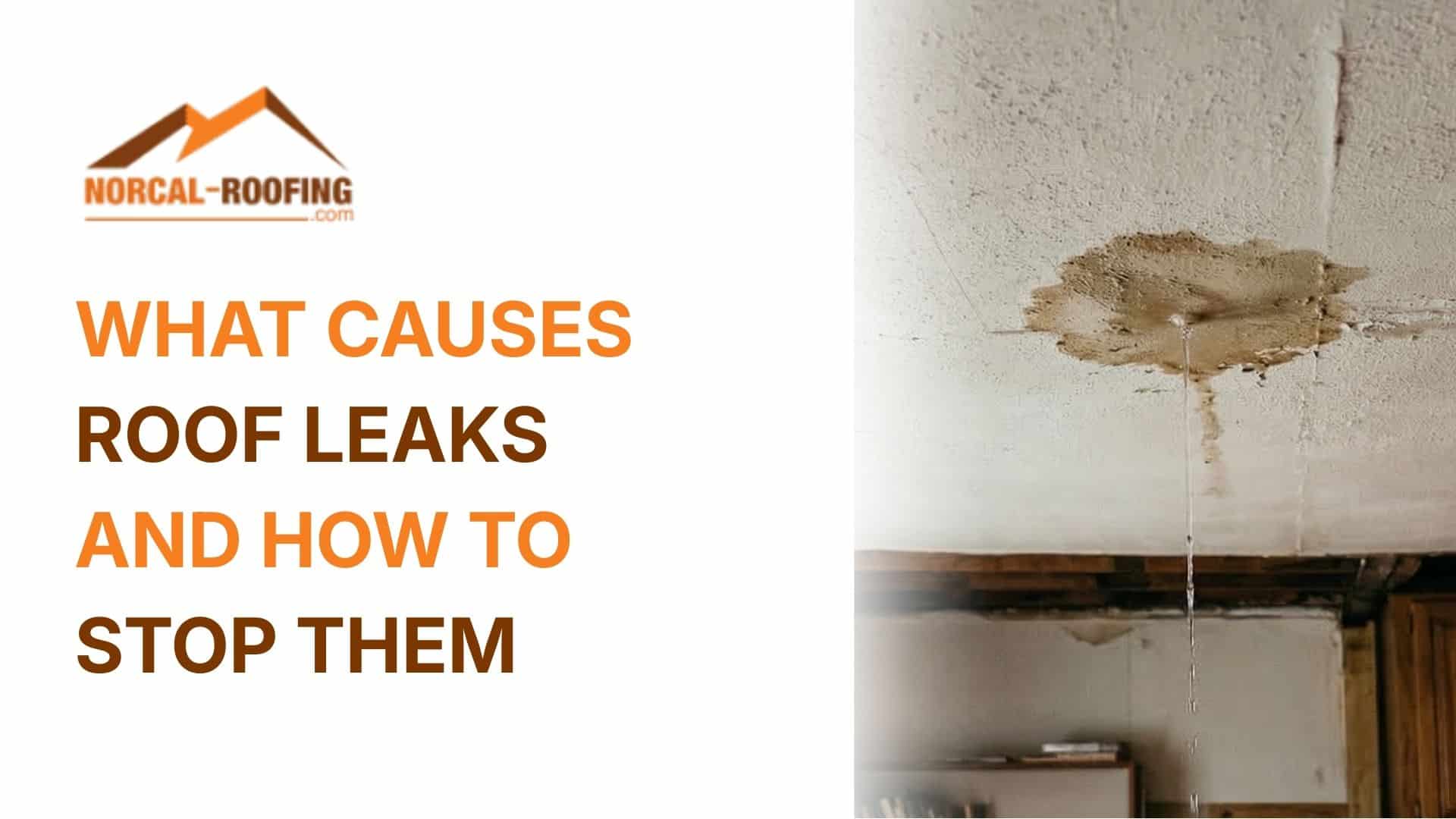
A roof leak rarely announces itself at a convenient time. More often, you notice a water stain on the ceiling, a drip during a rainstorm, or a musty smell that just won't go away — and by the time those signs show up, the damage has usually been building for a while.
The good news: most roof leaks have identifiable causes, and many of them are preventable. At Norcal-Roofing, we've inspected thousands of roofs across Redding and Northern California, and we see the same culprits over and over again. Here's what you need to know.
The Most Common Causes of Roof Leaks
1. Damaged or Missing Shingles
Shingles are your roof's first line of defense. When they crack, curl, blister, or go missing entirely — often from high winds, age, or storm damage — they leave the underlayment exposed. Water finds these gaps fast, especially during Northern California's heavy winter rains.
2. Faulty or Deteriorated Flashing
Flashing is the metal material that seals joints and transitions on your roof — around chimneys, skylights, vents, and where the roof meets a wall. When flashing cracks, corrodes, or was installed improperly, it becomes one of the most common entry points for water. This is a big one we see in older Redding homes.
3. Clogged or Damaged Gutters
Your gutters and your roof work as a system. When gutters are clogged with leaves, debris, or nests, water backs up and sits along the roofline — eventually working its way under shingles. Left unchecked, this leads to rot, mold, and leaks along the eaves.
4. Cracked or Improperly Sealed Roof Vents
Roof vents, pipe boots, and penetrations are common weak spots. The rubber or plastic boots that seal around pipes deteriorate over time — especially under the intense Redding heat. Once that seal fails, water has a clear path straight into your attic.
5. Age and General Wear
Even a well-maintained roof has a lifespan. Most asphalt shingle roofs last 20–30 years. As they age, materials become brittle, granules wash away, and the roof simply loses its ability to shed water effectively. If your roof is 15+ years old and you're seeing signs of leaks, age may be a factor.
6. Valleys and Low-Slope Areas
Roof valleys — where two roof planes meet — handle a high volume of runoff. If the valley flashing is worn or the shingles weren't installed correctly in this area, it becomes a prime leak zone. Flat or low-slope sections of roof are also vulnerable because water drains more slowly and can pool.
7. Ice Dams (Yes, Even in NorCal)
Higher elevation areas of Northern California — Shasta, Trinity, and parts of the foothills — do see freezing temperatures. When snow melts on a warm roof and refreezes at the colder eaves, it forms an ice dam that forces water under shingles. If you're in an area with occasional snow or frost, this is worth knowing.
Important: Where you see the water stain inside your home is almost never where the leak originates on the roof. Water travels along rafters and decking before it drips. A professional inspection is the only reliable way to find the true source.
How to Stop Roof Leaks Before They Get Worse
The most effective way to stop roof leaks is to catch the warning signs early — before water has a chance to do serious damage to your decking, insulation, and interior. Here's what proactive homeowners do:
Your Roof Leak Prevention Checklist
- Schedule a professional roof inspection every 1–2 years, especially after major storms
- Clean gutters and downspouts at least twice a year (spring and fall)
- Visually inspect your roof from the ground after high winds — look for missing or lifted shingles
- Check your attic after heavy rain for signs of moisture, staining, or daylight coming through
- Make sure all roof penetrations (vents, pipes, skylights) are properly sealed
- Trim overhanging tree branches that can scrape shingles or deposit debris
- Don't ignore small leaks — a slow drip today becomes a major repair tomorrow
When to Call a Roofer Immediately
If you see active water intrusion, sagging ceiling areas, visible mold growth, or daylight through your roof deck — don't wait. These are signs that damage has progressed beyond a minor fix. The longer you wait, the more it costs to repair.
Why Northern California Roofs Need Extra Attention
Redding and the surrounding region put roofs through a unique gauntlet: blazing summers that regularly hit 110°F, rapid temperature swings between day and night, and wet winters that can bring heavy rain and wind in quick succession. That cycle of extreme heat followed by intense rain is particularly hard on roofing materials — it accelerates cracking, speeds up granule loss, and stresses every seal and flashing on the roof.
That's why we always tell homeowners: don't wait for a problem to show up on your ceiling. By then, you've likely already got damaged decking, wet insulation, and potentially mold starting to form in your attic.
A quick inspection — especially after summer and again after winter storms — can catch small issues before they become expensive ones.
Worried About a Roof Leak?
We'll come out, inspect your roof, and give you an honest assessment — no pressure, no guesswork. Serving Redding and all of Northern California.